nail salon exhaust system
Nail Salon Exhaust System: The Complete Guide To Clean Air
Nail salon exhaust systems are critical for maintaining a safe, compliant workspace, and source capture local exhaust ventilation (LEV) is the most effective solution available. These systems directly intercept airborne contaminants—such as acetone, methacrylates, and dust—right at the nail station, before they can spread into the breathing zone. By capturing pollutants at their origin and expelling them outdoors, LEV units dramatically reduce technician exposure and improve overall indoor air quality. This targeted approach is far superior to general dilution ventilation, which simply mixes contaminated air with clean air, leaving harmful particles suspended in the room.
Choosing a system that meets the International Mechanical Code (IMC) is non-negotiable for any professional salon. The IMC specifies that exhaust must capture contaminants at the source and discharge them to the outdoor atmosphere, not recirculate them indoors. Approved systems, like those from AeroVex, are engineered to satisfy these strict ventilation code requirements, ensuring your business passes inspections without last-minute headaches. Investing in a code-compliant unit not only protects your legal standing but also signals to clients that you prioritize health and safety, a key factor in building long-term trust and loyalty.
Beyond regulatory compliance, the primary beneficiary of a high-quality exhaust system is the nail technician, who faces daily, prolonged exposure to chemical vapors. Studies show that chronic inhalation of these compounds can lead to respiratory issues, headaches, and skin sensitivities. By installing a powerful LEV system, you reduce airborne chemical concentrations by up to 90% compared to no ventilation, directly safeguarding the health of your staff. This proactive measure reduces sick days, boosts morale, and demonstrates a genuine commitment to employee well-being, which is essential for retaining skilled talent in a competitive industry.
Finally, when selecting a system, focus on performance metrics like airflow rate (measured in CFM) and filter efficiency, rather than just price. A robust unit should pull vapors away from the client and technician simultaneously, using adjustable arms or downdraft tables to maximize capture. Many top-rated models are also quiet, ensuring a relaxing salon ambiance without the roar of industrial machinery. Ordering a proven, code-approved system today means you are not just buying equipment—you are investing in a cleaner, healthier, and more professional environment that clients will notice and appreciate.

NAIL SALON EXHAUST SYSTEM GUIDE FOR CLEAN AIR
Why Every Nail Salon Needs A Professional Exhaust System
Every nail salon generates a constant stream of chemical vapors from acrylics, gels, and polish removers. Without a professional exhaust system, these fumes accumulate, leading to headaches, respiratory irritation, and long-term health risks for technicians who breathe them daily. A dedicated manicure extractor pulls contaminants away from the breathing zone, ensuring a safer workspace for everyone present.
Choosing the right model requires balancing power with practicality. Look for a unit with a high CFM rating to capture fumes effectively, but also consider noise levels and filter replacement costs. A powerful yet convenient design features adjustable arms, easy-to-clean surfaces, and a compact footprint that fits your station layout without obstructing client interaction.
For home-based nail techs, a portable extractor is a smart investment. These models offer sufficient suction for occasional use while remaining lightweight and affordable. However, ensure the filter system is adequate for your product volume, as low-end units may fail to remove all airborne particles, leaving you exposed to harmful compounds during extended sessions.
Ultimately, proper ventilation is non-negotiable for compliance and reputation. A professional system not only protects health but also signals quality to clients, who increasingly prioritize clean, breathable environments. By prioritizing air quality, you reduce liability, improve comfort, and extend the longevity of your career in an industry where safety should never be an afterthought.
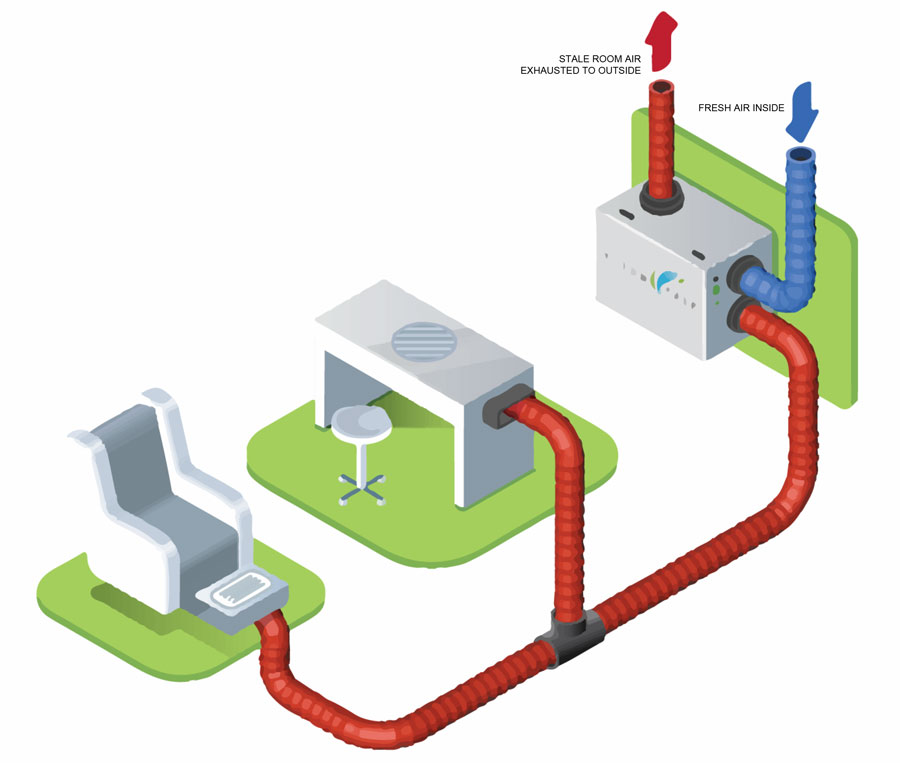
PROFESSIONAL EXHAUST SYSTEM FOR NAIL SALON SAFETY
Best Nail Salon Exhaust System: Top Features To Look For
The most critical feature in any nail salon exhaust system is source capture capability, which directly addresses the invisible sphere of contaminated air surrounding each client’s face. A high-quality system positions a suction inlet within inches of the nail work area, pulling vapors and dust before they can rise into breathing zones. Look for adjustable arms or hoods that maintain this proximity during manicures and pedicures, ensuring consistent protection throughout every service.
Equally important is the system’s ventilation code compliance and air exchange rate. Proper systems should meet or exceed local building and health regulations, typically requiring a minimum of 20 air changes per hour in nail salons. This ensures that airborne contaminants, including acetone and methacrylate dust, are continuously diluted and removed. Without this baseline, even powerful local exhaust fails to protect technicians and clients from cumulative exposure over long shifts.
Filtration efficiency and maintenance accessibility are non-negotiable for long-term performance. A multi-stage filter system—pre-filter, HEPA, and activated carbon—captures both particulate matter and chemical odors, reducing occupational exposure to harmful compounds. Choose units with easy-to-replace filters and clear indicator lights for saturation, as clogged filters drastically reduce airflow. Regular filter changes every three to six months, depending on volume, keep the system running at peak effectiveness.
Finally, consider noise levels and ergonomic placement, as these impact daily usability and staff compliance. Systems operating below 60 decibels allow normal conversation and reduce fatigue during eight-hour shifts. Wall-mounted or under-table units should not obstruct technician movement or client comfort. A well-designed exhaust not only improves indoor air quality but also signals professionalism, enhancing client trust and retention while safeguarding the health of everyone in the salon.

BEST NAIL SALON EXHAUST FEATURES TO CONSIDER
Nail Salon Exhaust System Installation: Step-by-Step Process
Proper nail salon exhaust system installation begins with a site assessment to determine the optimal source-capture points, typically at each manicure table. Technicians then mount hoods or slotted vents directly above the work area, connecting them to ductwork that leads outside. The process also includes sealing all joints to prevent leaks, ensuring the system meets local ventilation codes and safely removes airborne contaminants from the breathing zone.
After the physical ductwork is in place, the exhaust fan is installed and calibrated to achieve the required air changes per hour, usually based on salon size and nail station count. The fan must be sized to overcome static pressure from the duct run, and a make-up air system is often added to balance the negative pressure. This step is critical to prevent backdrafts and ensure consistent capture of chemical vapors from acrylics and gels.
Once the system is operational, technicians perform a smoke test to visualize airflow and verify that every station receives adequate suction. This testing phase also checks that exhaust outlets are positioned away from windows, doors, and HVAC intakes, preventing re-entry of contaminated air. Regular maintenance schedules are then established, including filter replacement and fan belt checks, to sustain performance and occupational safety over time.
Finally, the installation concludes with staff training on proper table positioning and daily ventilation checks. Pictures from actual salons show that new systems often integrate discreetly with modern decor, yet their impact is measurable: improved indoor air quality and reduced exposure to harmful airborne particles for both clients and nail technicians. By following this step-by-step process, salon owners meet code requirements while protecting everyone in the space.
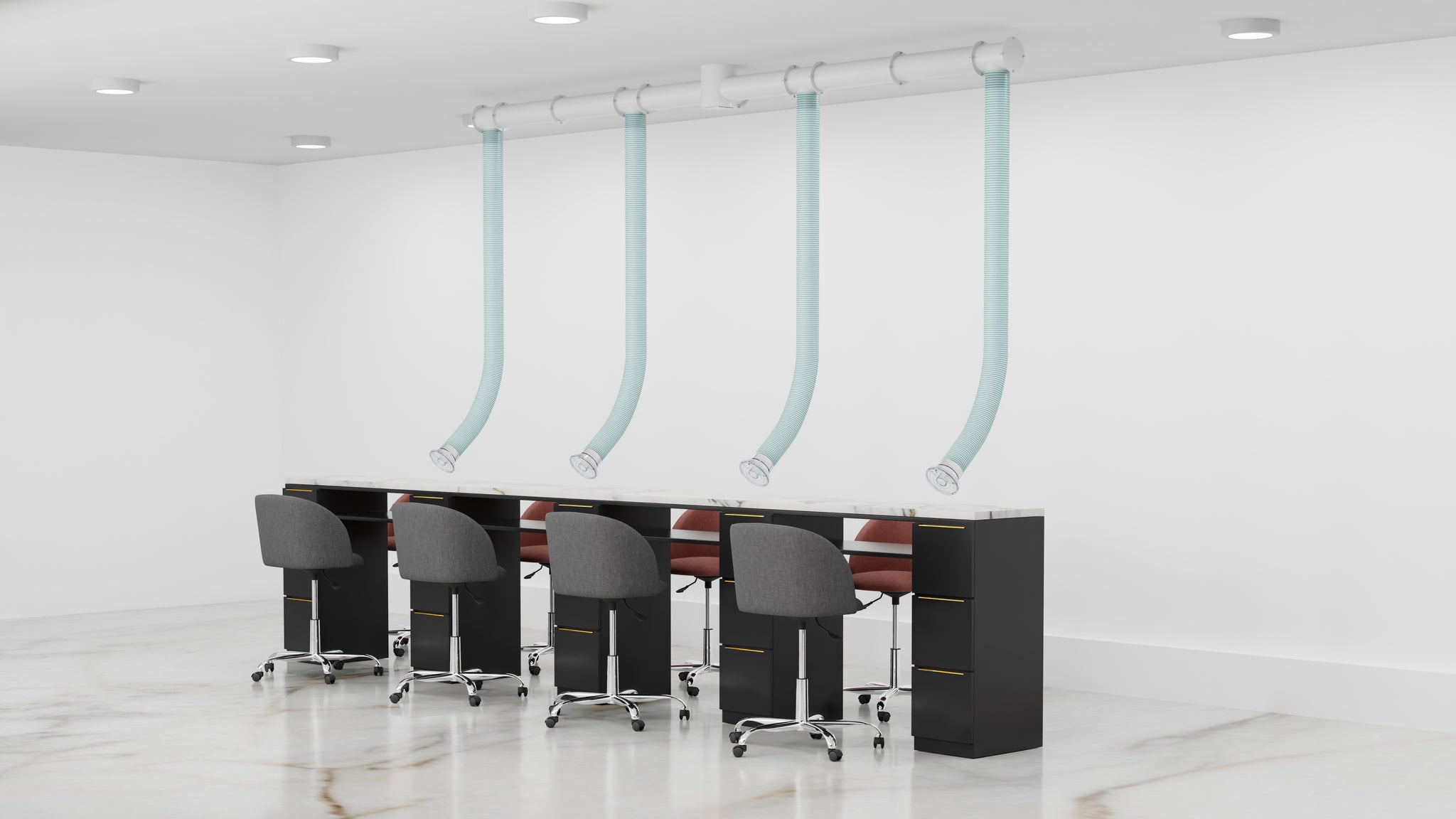
STEP BY STEP NAIL SALON EXHAUST INSTALLATION
Nail Salon Exhaust System Cost Vs. Price: What To Expect
When budgeting for a nail salon, the exhaust system cost is a critical line item that directly impacts both client experience and technician health. In Dallas, monthly suite rents can exceed $1,200, so skimping on ventilation to save a few hundred dollars is a false economy. A proper local exhaust system, which pulls air from around the client’s hands or feet, typically ranges from $800 to $3,000 per station, depending on CFM capacity and filter quality.
The price difference between a basic tabletop unit and a built-in downdraft system is significant, but so is the performance. Basic units may cost $300–$600 but often fail to capture fumes effectively, leaving a lingering chemical smell that deters high-end clientele. Conversely, a professional-grade system at $1,500–$2,500 per nail tech station can reduce airborne dust and monomer vapor by up to 90%, justifying the higher upfront expense through better retention and fewer health complaints.
Operational costs also matter beyond the initial purchase. Replacement filters, typically needed every 3–6 months, add $50–$150 per station annually. Plus, energy consumption from a strong exhaust motor can raise utility bills by 10–15% in a busy suite. When comparing price vs. cost, factor in these recurring expenses over a 5-year lease—a cheaper system with frequent filter changes may end up costing more than a premium unit with longer-lasting carbon filtration.
Ultimately, expect to invest $2,000–$5,000 total for a two-station setup with professional-grade local exhaust. While that seems steep against a $1,200 monthly rent, it protects your certification and reputation. Clients who notice a fresh, odor-free environment are willing to pay premium prices, and you avoid the hidden cost of technician turnover due to respiratory irritation. Prioritize efficiency over sticker price to secure long-term profitability.
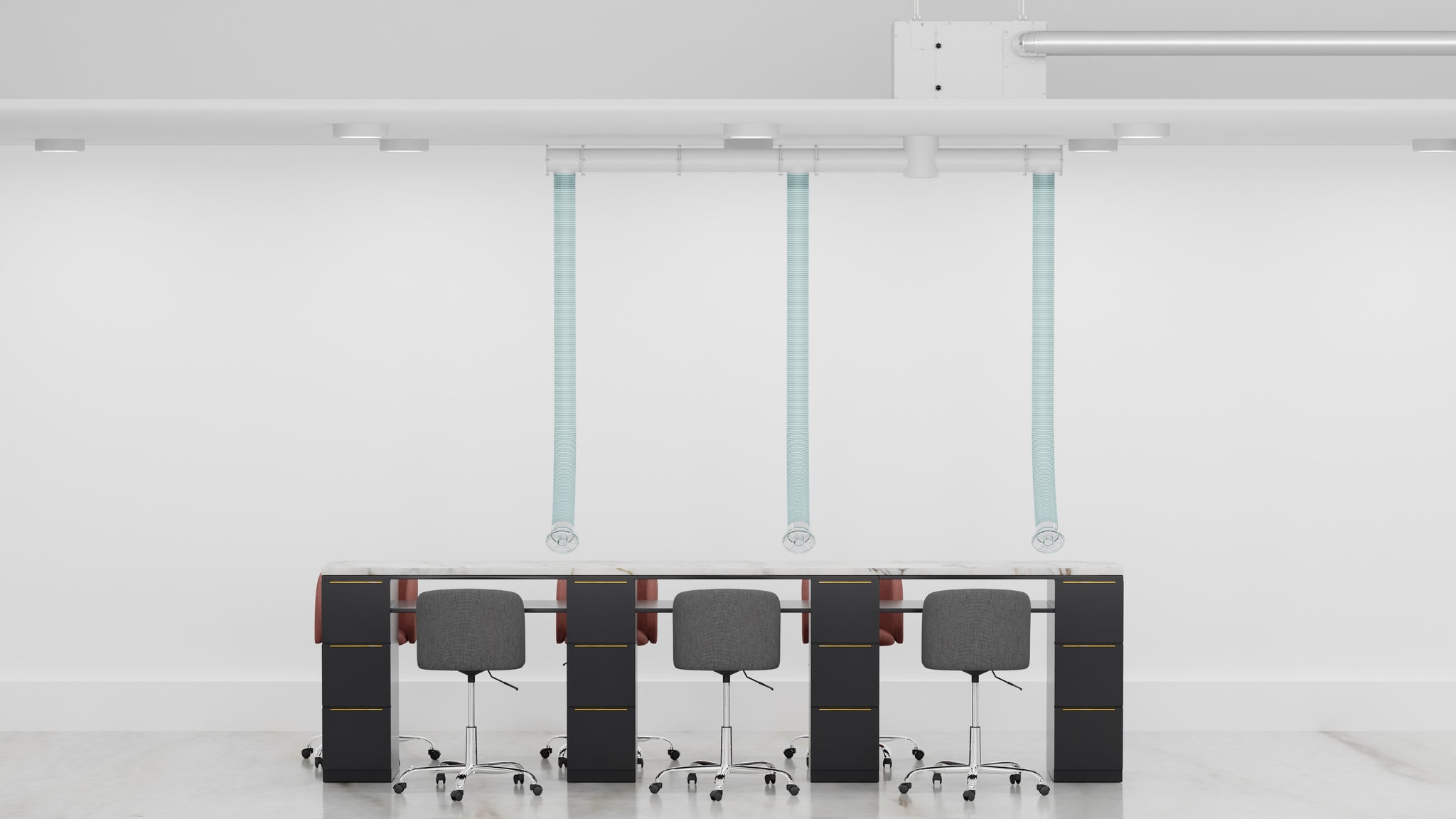
NAIL SALON EXHAUST SYSTEM COST AND PRICING GUIDE
Portable Ventilation For Nail Salon: Flexibility And Efficiency
Portable ventilation for nail salons delivers the flexibility to target fumes exactly where they are generated, without the cost or disruption of permanent ductwork. The Extract-All Salon Pure Air 3 Ventilation System offers 350 CFM of source capture power, making it a small but mighty tool for esthetician workstations. This portability allows you to reposition the unit between manicure tables, pedicure chairs, or tattoo stations in seconds, adapting to your daily workflow.
This system also meets salon ventilation code requirements, which is a critical factor for compliance and safety. By pulling contaminated air directly at the source, the SPA3 helps protect nail technicians from the continuous inhalation of acrylic dust and monomer vapors. Unlike ceiling-mounted units, a portable exhaust unit targets the breathing zone, not just the general room air. You gain a higher level of protection during long services, while the flexible black exhaust hose allows for precise placement.
Efficiency is not just about suction power; it is about low disruption and high value. The Aerovex WHISPER MiniVent is a best seller and the most popular source capture system on the market because it combines quiet operation with effective airflow. Its compact design takes up minimal counter space, allowing you to keep your salon layout open and client-friendly. The system is designed to be easy to set up, easy to move, and easy to clean, which saves you time during busy appointment schedules.
Finally, a portable ventilation unit adds a layer of professionalism that clients notice. A clean, fresh-smelling salon signals health and care, which encourages repeat business. The Extract-All system in white matches modern salon aesthetics, and the flexible hose can be tucked away when not in use. By investing in a self-contained, high-CFM unit, you are not just buying a filter; you are securing a flexible, code-compliant solution that continuously protects your team’s health and your business’s reputation.
“`
Nail Salon Fume Extractor: Choosing The Right Unit
Choosing the right nail salon fume extractor starts with matching airflow capacity to your specific work volume. For a single manicure station, a unit pulling 100-150 CFM often suffices, but multi-tech salons need higher specs to capture acrylic dust and monomer vapors effectively. Compare the filter layers—activated carbon for odors and HEPA for particulates—since both are essential for comprehensive protection.
Your workspace layout dictates whether a portable source-capture arm or a sleek under-desk model works best. Source capture systems positioned within inches of the nail bed dramatically outperform ceiling-mounted units, as they intercept contaminants before they disperse. Look for adjustable arms and quiet operation under 55 decibels to keep client conversations comfortable while maintaining constant suction during filing and gel curing.
Filter replacement frequency and cost directly impact your long-term budget. A quality unit with a pre-filter can extend HEPA life to 6-12 months, while carbon filters may need swapping every 2-4 months in high-production salons. Check for washable components and indicator lights that signal saturation, preventing you from running an ineffective system that still emits fumes into the breathing zone.
Finally, verify compliance with local ventilation codes and occupational exposure limits. Units meeting OSHA and NIOSH guidelines for airborne contaminants reduce health risks for technicians who work 8-hour shifts. The HealthyAir® source capture line, for example, combines adjustable suction with multi-stage filtration to meet these standards, ensuring your investment protects both staff and clients while keeping your air visibly clearer and noticeably fresher.
Clean air is the foundation of a thriving nail salon, protecting both your health and your reputation. From understanding installation costs to selecting the right portable fume extractor, every step toward better ventilation is an investment in your business’s longevity. You now have the knowledge to evaluate top features, compare pricing, and execute a professional setup. Do not delay your upgrade—prioritize your team’s well-being and client comfort today. Choose the right exhaust system, install it properly, and breathe easier knowing you have created a safer, more professional workspace.